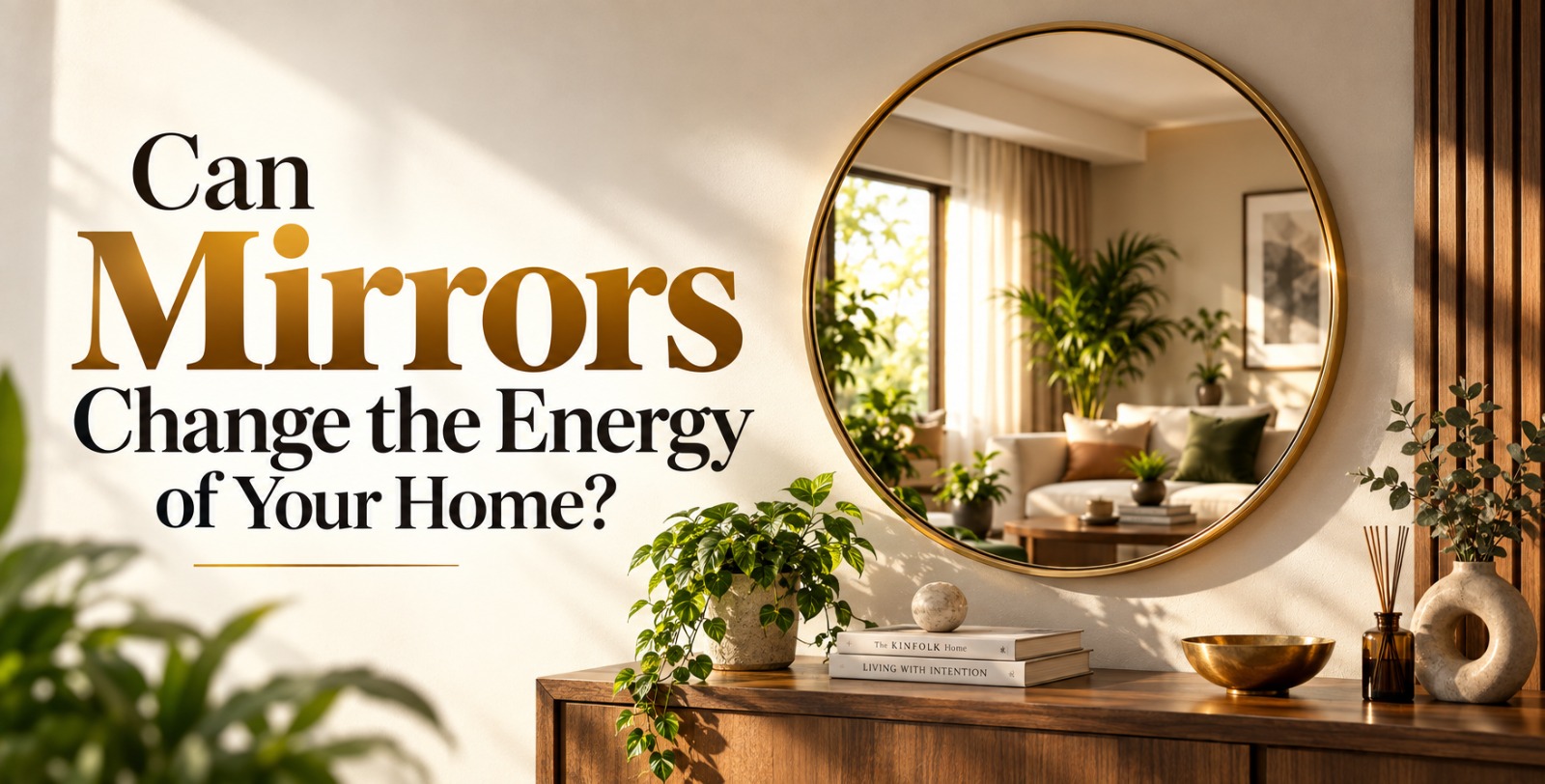
Mirror Placement According to Vastu: Can Mirrors Change the Energy of Your Home?
A mirror does more than reflect your appearance. In Vastu Shastra, mirror placement is considered an important aspect of the energy and balance of a space. Because mirrors reflect light, surroundings and visual space, their position can influence how a room feels and functions. This is why where you place a mirror according to Vastu matters just as much as the mirror itself.
From the main entrance and living room to the bedroom and dining area, thoughtful mirror placement can help create a more balanced and visually harmonious home. But what does Vastu actually say about mirrors? Which direction is best? And which placements should you avoid? Let's explore.
Why Is Mirror Placement Important in Vastu?
Vastu Shastra focuses on creating harmony between the built environment and the natural elements around us. A mirror is different from ordinary decor because it reflects whatever is in front of it. In Vastu, this reflective quality is taken into consideration when deciding where a mirror should be placed. The right placement can be used to:
• Enhance the sense of openness in a room
• Reflect natural light
• Create a visually brighter environment
• Support balance within a space
• Avoid unwanted reflections of doors, clutter or other areas
Therefore, mirror placement according to Vastu is not simply about finding an empty wall. The direction, position and what the mirror reflects can all be considered.
Which Direction Is Best for a Mirror According to Vastu?
The direction of a mirror is one of the most commonly searched aspects of Vastu for mirrors.
Traditionally, mirrors are often recommended on the North or East walls, depending on the layout and purpose of the room. These directions are associated with positive qualities in Vastu, and placing a mirror thoughtfully in these areas may help create a brighter and more open atmosphere. However, there is no universal placement that works for every home.
The entrance, room layout, windows, doors and existing Vastu arrangement should all be considered before deciding the exact position.
Where Should You Keep a Mirror at Home?
1.Mirror in the Living Room
The living room is one of the most suitable areas for a decorative mirror. A strategically placed mirror can make the room appear larger and brighter, particularly when it reflects natural light or an aesthetically pleasing part of the space. For living room Vastu, avoid positioning the mirror where it reflects clutter, damaged objects or an untidy corner. Instead, let it reflect something visually pleasant.
2. Mirror in the Dining Area
A mirror placed near the dining area can create an interesting sense of spaciousness. From a Vastu perspective, some practitioners consider a mirror that reflects the dining table to be favourable because the dining table represents nourishment and abundance. The mirror should, however, be positioned carefully so that it does not create discomfort or excessive visual distraction while eating.
3. Mirror in the Bedroom
Bedroom mirror placement requires more attention. A common Vastu recommendation is to avoid placing a mirror directly opposite the bed, particularly if the mirror reflects the people sleeping. Apart from traditional Vastu considerations, this placement can also be visually distracting, especially at night. If a mirror is necessary in the bedroom, consider placing it where the bed is not directly reflected or use a wardrobe with a mirror that can be covered when not in use.
4. Mirror Near the Main Entrance
The main entrance is an important zone in Vastu. Because a mirror reflects what is in front of it, placing one directly opposite the main entrance is often avoided in traditional Vastu practices. Instead of reflecting the entrance directly, consider a side wall if the layout permits. The exact recommendation can depend on the direction of the entrance and the overall floor plan.
5. Mirror in the Bathroom
Mirrors are naturally common in bathrooms, but their placement still matters. A mirror should ideally be positioned where it receives adequate lighting and provides a clear reflection without creating an uncomfortable or cramped appearance. For Vastu-conscious interiors, the mirror should also be kept clean and free from cracks or damage.
Mirror Placement Mistakes to Avoid
Even a beautiful mirror can become a poor design choice if it is placed without considering its surroundings. Here are some commonly avoided placements according to traditional Vastu principles:
Avoid a Mirror Directly Opposite the Main Door
A mirror directly facing the entrance is traditionally avoided because it is believed to reflect energy entering the home back outside.
Avoid a Mirror Directly Facing the Bed
This is one of the most commonly discussed bedroom mirror Vastu recommendations. If the mirror reflects the bed, consider moving it or covering the reflective surface at night.
Avoid Broken or Cracked Mirrors
A damaged mirror can negatively affect the appearance and feel of a room. From both a practical and Vastu perspective, replacing cracked or broken mirrors is preferable.
Avoid Reflecting Clutter
A mirror doubles whatever appears in its reflection visually. If it reflects clutter, an overflowing storage area or an unpleasant view, the room can feel more chaotic. Instead, use mirrors to reflect light, space, plants or aesthetically pleasing elements.
Can Mirrors Really Change the Energy of a Room?
This depends on how we understand the idea of “energy.” From a traditional Vastu perspective, mirrors are considered reflective elements that can influence the energy dynamics of a space through their placement and reflection. From an interior-design perspective, mirrors can clearly influence how a room looks and feels by reflecting light, creating visual depth and making spaces appear more open. So, whether you approach Vastu spiritually, traditionally or as a design philosophy, thoughtful mirror placement can make a meaningful difference to the overall environment of a home. The key is not simply to add more mirrors, but to place them with intention.
Mirror Vastu: A Simple Checklist
Before placing a mirror, ask yourself:
• Which direction is the mirror facing?
• What does the mirror reflect?
• Does it directly reflect the main entrance?
• Does it reflect the bed?
• Is the mirror cracked, damaged or distorted?
• Does it reflect natural light or create unnecessary glare?
• Does the reflection make the room feel more spacious or more cluttered?
These simple checks can help you make a more considered decision.
Does Every Home Need the Same Mirror Placement?
No. Every home has a different floor plan, entrance direction, room arrangement, window position and natural-light pattern. This is why Vastu mirror placement should ideally be considered in the context of the complete space, rather than following a single rule for every home. A placement that works well in one house may not be suitable in another. For more personalized Vastu guidance, the complete layout and directional arrangement of the property should be considered.
Final Thoughts
Mirrors can be powerful design elements, but in Vastu, their placement is considered more important than simply their appearance. The right mirror in the right location can enhance light, openness and visual balance, while an unsuitable reflection may create an uncomfortable or distracting environment. So before putting a mirror on the next empty wall, take a moment to look beyond the reflection. Check the direction. Check the placement. And most importantly, check what the mirror reflects. Because in Vastu, it's not just about having a mirror, it's about placing it with purpose.
Frequently Asked Questions
Which direction is best for a mirror according to Vastu?
North and East walls are commonly recommended for mirror placement, although the ideal position depends on the room and overall layout.
Can we keep a mirror opposite the main door?
Traditional Vastu practices generally advise avoiding a mirror directly opposite the main entrance.
Is a mirror opposite the bed good according to Vastu?
It is commonly avoided in Vastu because the mirror directly reflects the bed. If possible, position the mirror so that the bed is not reflected.
Which wall is best for a mirror in the living room?
North or East walls are commonly considered suitable, but the mirror should also be positioned to reflect light or an attractive part of the room.
Can a mirror be placed in the bedroom?
Yes. However, according to common Vastu guidance, avoid placing it where it directly reflects the bed.
Should broken mirrors be kept at home?
It is generally recommended to replace cracked or broken mirrors rather than keeping them as part of the home décor.
Comments (0)
Be the first to share your reflections.