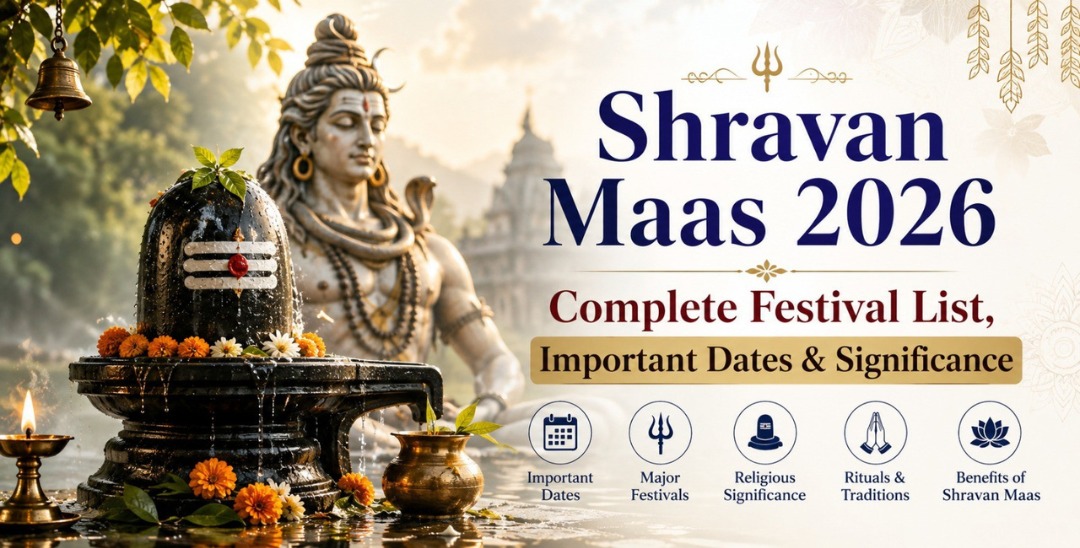
Shravan Maas 2026: Complete Festival List, Important Dates & Significance
Shravan Maas, also known as Sawan, is one of the most spiritually significant months in the Hindu calendar. The month is especially associated with Lord Shiva, devotion, fasting, prayers and several important festivals. But Shravan is not just about Sawan Somwar. From Nag Panchami and Mangala Gauri Vrat to Raksha Bandhan, Shravan Purnima and Janmashtami, the month brings a series of important religious observances. For devotees, it is a time for Shiva worship, vrat, mantra chanting, charity and spiritual discipline.
However, there is one important point to understand before checking the 2026 dates: Shravan follows different lunar calendar systems across India. In Maharashtra and several other regions that follow the Amanta calendar, Shravan Maas 2026 begins on 13 August and ends on 11 September. In North India, which follows the Purnimanta system, Shravan falls approximately from 30 July to 28 August.
Why Is Shravan Maas Considered So Important?
Shravan is traditionally regarded as a sacred month dedicated especially to Lord Shiva.
Devotees observe fasts, visit Shiva temples, perform Abhishekam, offer Bilva leaves, chant Shiva mantras and spend more time in prayer and spiritual practices. The month is also associated with the well-known Samudra Manthan story, in which Lord Shiva consumed the deadly Halahala poison and became Neelkanth. This association is one of the reasons Shravan holds such a special place in Shaiva tradition.
Sawan Somwar 2026: Mondays Dedicated to Lord Shiva
Sawan Somwar refers to Mondays observed during Shravan. In the Maharashtra/Amanta calendar, the four Shravan Mondays in 2026 fall on:
• 17 August
• 24 August
• 31 August
• 7 September
Devotees traditionally observe Somwar Vrat, visit Shiva temples and offer water, milk, Bilva leaves and prayers to the Shivling. For many devotees, Sawan Somwar is also associated with prayers for peace, prosperity, marital harmony and fulfilment of sincere wishes.
Nag Panchami 2026
Nag Panchami falls on 17 August 2026. The festival is observed on Shukla Paksha Panchami of Shravan and is dedicated to the worship and reverence of Nag Devta. Nag Panchami also has a strong connection with Lord Shiva, as the serpent holds an important place in Shiva iconography. Traditional observances include prayers, offerings and worship of serpent deities. From an astrological perspective, Nag Panchami is also popularly associated with Naga-related beliefs and Naga Dosha. However, such interpretations should be based on an individual's complete Kundli rather than assuming that every person needs the same remedy.
Mangala Gauri Vrat During Shravan
In Maharashtra, Mangala Gauri Vrat is an important Shravan tradition, particularly associated with married women. The vrat is observed on Tuesdays during Shravan. In 2026, the dates are: 18 August, 25 August, 1 September and 8 September. Traditionally, Goddess Gauri is worshipped with prayers for marital happiness, family wellbeing and prosperity.
Shravan Putrada Ekadashi 2026
Shravan Putrada Ekadashi falls on 23 August 2026 according to the Maharashtra calendar. Ekadashi is traditionally observed through fasting, prayer and devotion to Lord Vishnu. Putrada Ekadashi holds particular significance in Hindu tradition and is associated with prayers for family wellbeing and progeny. As with all vrat observances, individual practices can differ according to family tradition and regional Panchang.
Narali Purnima 2026
Narali Purnima will be observed on 27 August 2026 in Maharashtra. The festival is especially important in coastal Maharashtra and is traditionally associated with offering coconuts to the sea and seeking blessings for safety and prosperity. It also marks an important seasonal and cultural transition for coastal communities.
Raksha Bandhan & Shravan Purnima 2026
Raksha Bandhan falls on 28 August 2026, coinciding with Shravan Purnima. Raksha Bandhan celebrates the bond between brothers and sisters through the traditional tying of Rakhi. Shravan Purnima also carries significance for several other regional observances, making it one of the most important days toward the end of Shravan.
Janmashtami 2026
In the Maharashtra/Amanta calendar, Krishna Janmashtami falls on 4 September 2026, followed by Dahi Handi and Gopalkala on 5 September. Although Janmashtami is often associated with the following lunar month in some regional calendars, the festival falls within the Maharashtra Shravan period in 2026. This is another excellent example of why regional Panchang differences matter when searching for Hindu festival dates.
Simple Spiritual Practices for Shravan Maas
Shravan does not have to be about elaborate rituals. Depending on your personal beliefs and traditions, you can observe the month through simple practices such as:
• Offering water to Shivling
• Chanting Om Namah Shivaya
• Offering Bilva leaves to Lord Shiva
• Visiting a Shiva temple
• Observing a fast according to your health and tradition
• Practising meditation or prayer
• Donating food or useful items
• Helping those in need
• Maintaining discipline in daily life
The essence of Shravan is devotion and sincerity, rather than simply performing rituals mechanically.
Shravan Maas and Astrology
Shravan also has a special place in traditional Vedic Astrology because of its strong association with Lord Shiva and spiritual practices. Many devotees use this period for:
• Shiva Mantra chanting
• Meditation
• Rudrabhishek
• Prayers for mental peace
• Spiritual discipline
• Traditional astrological remedies
However, an important principle should be remembered: a remedy should ideally be selected according to the individual's Kundli. A practice that may be suitable for one person's horoscope may not necessarily be the right recommendation for another.
What Should You Do During Shravan Maas?
There is no single rule that applies to everyone. You can make Shravan meaningful by focusing on three things:
Devotion - Spend time in prayer and remembrance of the divine.
Discipline - Follow your chosen vrat or spiritual routine sincerely.
Charity - Share your resources and time with people who need support.
Shravan can therefore become more than a festival season, it can become a period of reflection, discipline and spiritual growth.
Final Thoughts
Shravan Maas 2026 brings together some of the most significant festivals and religious observances of the Hindu calendar. From Sawan Somwar and Nag Panchami to Mangala Gauri, Raksha Bandhan and Janmashtami, each occasion carries its own cultural, spiritual and traditional significance. Whether you observe Shravan through fasting, Shiva worship, mantra chanting, charity or simply by spending more time in reflection, the deeper message remains the same: Devotion becomes meaningful when it is accompanied by sincerity and discipline.
Frequently Asked Questions
When does Shravan Maas 2026 start in Maharashtra?
According to the Maharashtra/Amanta calendar, Shravan Maas begins on 13 August 2026 and ends on 11 September 2026.
When is Sawan Somwar in Maharashtra in 2026?
The four Shravan Mondays are 17 August, 24 August, 31 August and 7 September 2026.
When is Nag Panchami in 2026?
Nag Panchami is on 17 August 2026.
When is Raksha Bandhan in 2026?
Raksha Bandhan is on 28 August 2026, according to the referenced Maharashtra calendar.
Why are there different Shravan dates across India?
Different regions follow different lunar calendar systems. Maharashtra traditionally follows the Amanta system, while many North Indian regions follow the Purnimanta system, resulting in different Shravan start and end dates.
Which deity is worshipped during Shravan Maas?
Lord Shiva is especially worshipped during Shravan, although several other Hindu festivals and deities are also observed during the month.
Comments (0)
Be the first to share your reflections.